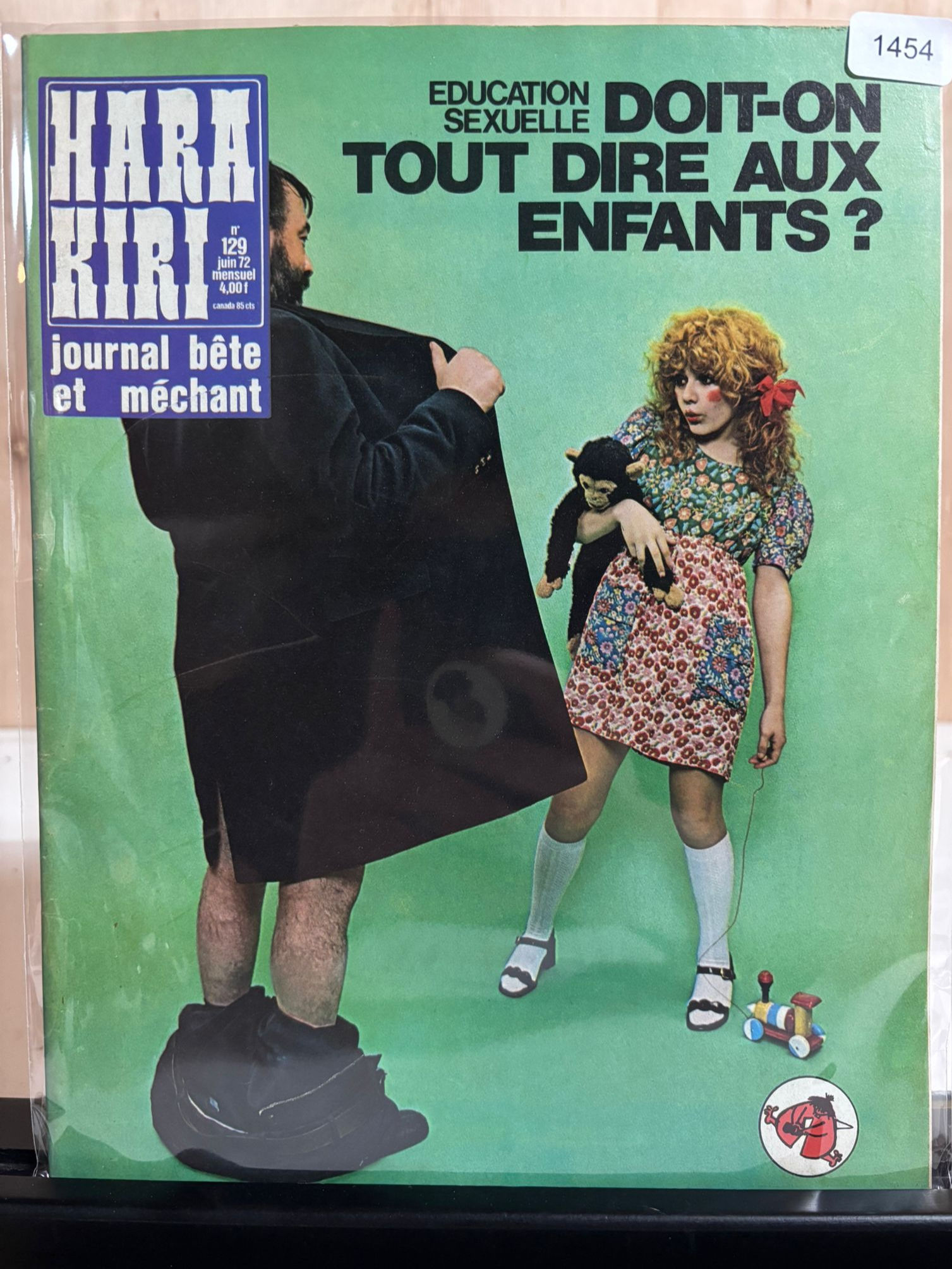
Hara‑Kiri n°129 (Juin 1972) addresses one of the most explosive social debates of the early 1970s: sexual education and censorship. Rather than offering an answer, the magazine stages a deliberately uncomfortable visual question.
The cover shows a man opening his coat in front of a young girl holding a toy monkey and pulling a small wooden train. The scene is clearly theatrical and staged, designed not to depict reality but to force confrontation with the headline:
“Éducation sexuelle — Doit‑on tout dire aux enfants ?”(“Sex education — Should we tell children everything?”)
Hara‑Kiri’s strategy here is provocation through exaggeration. By pushing the situation to an absurd and disturbing extreme, the magazine criticises both moral panic and silence. The image is not an endorsement of exposure, but a visual accusation aimed at hypocrisy, fear‑based censorship, and the adult discomfort surrounding how (or whether) children should be informed.
As with many Hara‑Kiri covers, the discomfort is intentional: the magazine uses shock to expose how society often prefers denial over discussion. The green background and studio lighting reinforce that this is a constructed tableau, not a narrative scene.
